

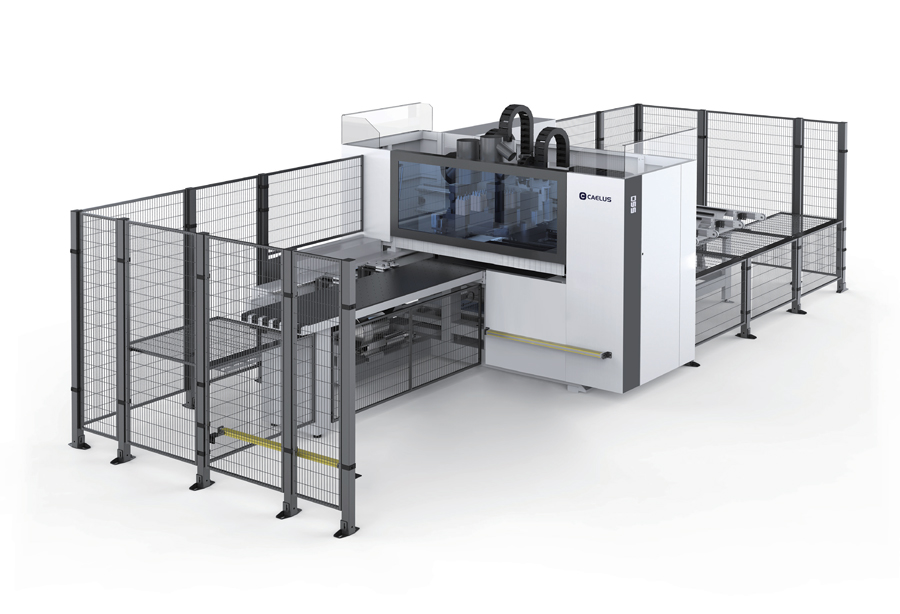
A wood CNC machine turns digital furniture designs into labeled, machined panels ready for edge banding, drilling and assembly. In cabinet and wardrobe factories, its applications include nesting full sheets, routing grooves, drilling hardware holes and sending accurate part data to the next process. The practical question is which machine should handle each stage of your workflow.
What Furniture Can a Wood CNC Machine Produce?
Wood CNC machines are widely used for MDF, particleboard and plywood furniture. Suitable configurations can also process selected solid wood and composite components.
Common applications include:
- Kitchen cabinets and bathroom vanities
- Wardrobes, closets and storage systems
- Office desks, shelves, drawers and workstations
- Cabinet doors and decorative wall panels
- Retail fixtures and reception counters
- Built in and ready to assemble furniture
Cabinet Production: More Than Cutting Rectangles
A cabinet contains sides, shelves, backs, doors and drawer components. These parts may need back panel grooves, shelf pin rows, hinge cups, dowel holes, connector holes and appliance cutouts.
A CNC nesting machine arranges multiple parts across a full sheet, then cuts, routes, grooves and vertically drills them. This suits custom kitchens where dimensions change between orders.
Part identification can be as important as cutting speed. Automatic labels connect similar looking panels to the correct order, machining program and downstream instructions.
For example, the CAELUS C3A automated CNC nesting and labeling line combines labeling, nesting, routing, cutting, grooving, drilling and outfeed. Its published configuration includes a 13.2 kW HSK F63 milling unit, a 16 position tool changer plus an aggregate holder, and six automatically controlled vacuum zones. An optional drilling unit provides 12 vertical and 8 horizontal drilling spindles with a grooving saw. ERP and user software integration can connect order data with production.
Frequent edge holes or machining on several faces may still be handled more efficiently by a dedicated six sided drilling center.
Wardrobe Production: Part Tracking Becomes Critical
Wardrobes contain large sides, repeated shelves, partitions, drawers and door parts. Many look similar while requiring different edging and drilling, making manual identification difficult in mixed production.
Each label can carry an order number, part name, edge information, assembly position and barcode that calls the correct drilling program. It is part of the production system, not simply a name tag.
After cutting and edge banding, a six sided drilling machine processes the top, bottom and edges without repeated manual flipping. Common operations include shelf, hinge, dowel, connector and drawer slide holes.
The CAELUS D5A automated six sided drilling solution accepts published panel lengths from 200 to 2,800 mm, widths from 50 to 1,220 mm and thicknesses from 10 to 60 mm. Its listed conveying speed is up to 70 m/min. This is not completed wardrobes per shift. Output also depends on hole quantity, loading and surrounding processes.
Custom Furniture: Flexibility Depends on Data
In batch size one production, orders have different dimensions, materials and hardware but still require repeatable machining.
CNC equipment stores dimensions and machining features in digital files. A designer can revise a cabinet width or shelf layout without making a physical template. CAM creates toolpaths, while nesting software combines parts from multiple orders on available sheets.
This suits built in storage, hotel furniture, shop fittings and residential interiors. Verified programs also allow repeat parts without manually marking every hole and groove.
Flat MDF and plywood parts are natural nesting applications. Curved rails, table legs and deeply shaped solid wood surfaces may require pod and rail workholding, rotary machining or a multi axis center. More axes do not automatically improve a panel furniture line.
Application and Machine Comparison
| Production need | Main operations | Practical machine choice |
|---|---|---|
| Cabinet and wardrobe panels | Nesting, cutting, grooving, labeling, vertical drilling | CNC nesting machine |
| Hinge, dowel and connector holes on several faces | Top, bottom and horizontal drilling, grooving, light milling | CNC six sided drilling center |
| Cabinet doors and decorative fronts | Profiling, pocketing, grooving, engraving | ATC CNC router or nesting machine with suitable tooling |
| Curved solid wood components | Contouring, joint machining and multi face work | Pod and rail, rotary or multi axis CNC |
| High mix panel furniture | Order data, labels, cutting, edge banding, drilling and sorting | Connected production workflow |
A CNC router is not a complete furniture factory. Edge banding, sanding, finishing and assembly remain separate. Faster cutting can also move the bottleneck downstream, so measure waiting time at drilling, edge banding and sorting.
A Practical Production Workflow
An efficient cabinet or wardrobe workflow normally follows these stages:
- Create the furniture design and confirm materials, hardware and dimensions.
- Generate the bill of materials, machining data and part labels.
- Optimize parts on full sheets with nesting software.
- Label, cut, groove and vertically drill the panels.
- Apply edge banding according to each part specification.
- Scan the label and complete face and edge holes on a six sided drilling center.
- Sort parts by cabinet, room or customer order.
- Inspect dimensions and hole positions before assembly and packing.
Before ordering, verify automatic label generation, barcode error handling and CAD, CAM or ERP compatibility. Manual matching of parts and programs can transfer the bottleneck from machining to data handling.
When Does More Automation Make Sense?
Automatic loading, outfeed and panel tracking are valuable when operators spend a large share of each shift moving sheets, finding parts or matching programs. They are less urgent when the machine waits for design approval, edge banding or assembly. Review the complete order path before adding conveyors or robots.
A growing factory can automate in stages. The first investment may address nesting and labeling. A later step can add edge banding capacity or six sided drilling when production records show a queue at that operation. This staged approach also gives the team time to standardize drawings, hardware rules and labels.
Floor space matters as much as machine speed. Mark loading, service and material routes on the proposed layout. Check that full sheets can reach the nesting table and finished panels can move to the next process without crossing forklift or operator paths. A technically capable line can still lose output through poor material flow.
How to Evaluate the Benefits with Real Numbers
Record at least five representative production days and track:
- Sheets processed and usable parts produced
- Material yield from each nesting plan
- Cutting, drilling and waiting time
- Manual panel flips and handling steps
- Labeling, drilling and sorting errors
- Rework caused by chipped edges or incorrect machining
- Completed cabinets or wardrobes per shift
Compare the same order mix. Test the smallest part, largest wardrobe side and most complex hole pattern, then confirm fit with your actual hinges, slides and connectors.
Common Mistakes When Selecting a Wood CNC Machine
Common mistakes include assuming one machine completes every process, choosing by spindle power alone, and calculating capacity without loading, labeling, edge banding, drilling and sorting.
An acceptance test should use the buyer's drawings, materials and fittings. Include barcode scanning, tool changes, small part hold down and repeated components. Agree on training, support, spare parts and acceptance criteria before delivery.
Choosing a Wood CNC Machine Manufacturer
A CNC machine manufacturer should ask about your products before recommending a model. Prepare:
- Products, order mix, panel sizes and materials
- Typical hole and groove patterns
- Target output per shift
- Existing design, CAM and ERP software
- Existing machines, factory space and utilities
CAELUS offers nesting machines, six sided drilling centers and automated panel processing solutions. Selection should begin with the process limiting quality or delivery, then consider upstream data and downstream equipment.
FAQ
Q1. Can one wood CNC machine make a complete cabinet?
A: One machine can cut, route, groove and complete selected drilling. Most factories still use separate processes for edge banding, extensive edge drilling, finishing and assembly.
Q2. What is the best CNC machine for wardrobe production?
A: Start with nesting when full sheet cutting and identification are the main problems. Add six sided drilling when horizontal holes or panel flipping limit production.
Q3. Can wood CNC machines process MDF, plywood and particleboard?
A: Yes. Match tooling, feed settings, vacuum hold down and extraction to the material and thickness, then test representative panels.
Q4. Does nesting always reduce material waste?
A: Results depend on part geometry, grain direction, kerf, trim allowance and reusable remnants. Compare actual yield using the same orders and materials.
Conclusion
Wood CNC machine applications in cabinet, wardrobe and custom furniture production extend from optimized nesting and automatic labeling to grooving, routing and multi-face drilling. The right setup depends on panel sizes, hole patterns, order mix and the process that limits daily output. A nesting machine organizes full-sheet cutting, while a six-sided drilling center completes face and edge holes. Match software, material flow and downstream capacity before choosing a machine or connected line.