

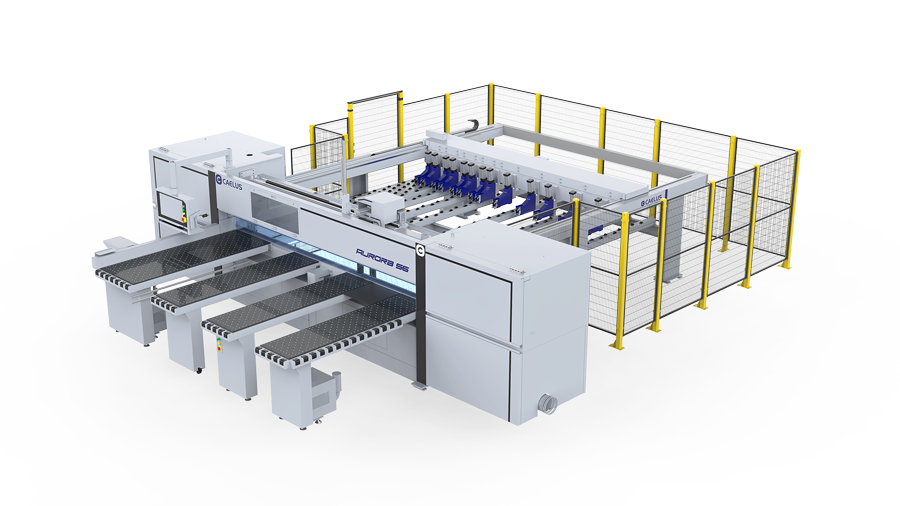
Was ist eine Druckbalkensäge?
Eine Druckbalkensäge ist eine Holzbearbeitungsmaschine für den Plattenzuschnitt, mit der große Platten in kleinere, maßgenaue Teile geschnitten werden. Sie wird üblicherweise für Sperrholz, MDF, Spanplatten, Melaminplatten, Laminatplatten, Acrylplatten, Kunststoffplatten, Aluminium-Verbundplatten und andere Plattenmaterialien verwendet.
Ihr Hauptzweck besteht darin, dem Bediener zu helfen, große Platten schnell und gleichmäßig auf präzise Maße zuzuschneiden.
Im Vergleich zu handgeführten Kreissägen oder herkömmlichen Kreissägen eignet sich eine Druckbalkensäge besser für große Plattenmaterialien. Sie bietet eine höhere Stabilität, präzisere geradlinige Schnitte, eine sicherere Bedienung und eine höhere Wiederholgenauigkeit.
Wozu wird eine Druckbalkensäge verwendet?
Druckbalkensägen finden in vielen Branchen breite Anwendung, da Plattenmaterialien im Bauwesen, im Möbelbau, im Innenausbau und in der gewerblichen Fertigung weit verbreitete Verwendung finden.
1. Korpusbau
Eine der häufigsten Anwendungen einer Druckbalkensäge ist der Korpusbau. Korpusbauer verwenden Druckbalkensägen zum Zuschneiden von Schranktüren, Seitenwänden, Einlegeböden, Schubladenteilen, Rückwänden und Trennwänden. Beim Korpusbau ist Präzision äußerst wichtig. Selbst ein kleiner Schnittfehler kann sich auf die Kantenanleimung, die Genauigkeit der Bohrungen und die Endmontage auswirken. Eine gut konzipierte Druckbalkensäge sorgt für gleichbleibende Maße bei Wiederholungsschnitten und erleichtert so die Herstellung sauberer und professioneller Korpusbauteile.
2. Möbelherstellung
Druckbalkensägen sind auch in der Möbelherstellung unverzichtbar. Sie werden zum Zuschneiden von Teilen für Kleiderschränke, Schreibtische, Bücherregale, Tische, Büromöbel, Unterschränke, TV-Möbel und viele andere Produkte verwendet. Bei der Möbelherstellung kommt es auf Effizienz und Wiederholgenauigkeit an. Wenn mehrere Teile auf die gleichen Maße zugeschnitten werden müssen, kann eine Druckbalkensäge manuelle Messfehler reduzieren und den Arbeitsablauf beschleunigen.
3. Handwerkliche Holzbearbeitungsbetriebe
Kleine und mittelgroße Holzbearbeitungsbetriebe setzen häufig Druckbalkensägen ein, um eine Vielzahl von Plattenmaterialien zu bearbeiten. Eine Druckbalkensäge kann einem Betrieb dabei helfen, Sonderanfertigungen mit höherer Präzision und geringerem körperlichen Aufwand zu realisieren. Für Betriebe, die mit großen Platten arbeiten, aber nur über begrenzten Platz verfügen, kann eine vertikale Druckbalkensäge besonders nützlich sein, da sie das Schneiden großer Platten im Stehen ermöglicht.
4. Werbetechnik
Druckbalkensägen werden häufig in der Werbetechnik zum Schneiden von Acrylplatten, PVC-Platten, Aluminiumverbundwerkstoffen, Schaumstoffplatten und Kunststoffplatten eingesetzt. In der Werbetechnik sind saubere, geradlinige Schnitte an großen Platten erforderlich. Eine Druckbalkensäge trägt dazu bei, sowohl die Schnittgeschwindigkeit als auch die Kantenqualität zu verbessern, insbesondere bei der Herstellung von Anzeigetafeln, Werbetafeln und Werbeschildern.
5. Bauwesen und Innenausbau
Im Bauwesen und im Innenausbau werden Druckbalkensägen zum Zuschneiden von Trockenbauplatten, Dekorplatten, Schichtstoffplatten, Sperrholzplatten und Fertigteilen eingesetzt. Das präzise Zuschneiden der Platten trägt dazu bei, die Montagezeit vor Ort zu verkürzen und die Passgenauigkeit der fertigen Bauteile zu verbessern.
6. Plattenbearbeitung und Vertrieb von Plattenmaterial
Druckbalkensägen werden auch von Plattenlieferanten, Materialhändlern und Weiterverarbeitungsbetrieben eingesetzt. Diese Unternehmen schneiden häufig Platten in Standardgröße auf Kundenwunsch auf Maß zu. In dieser Branche sind Geschwindigkeit, Genauigkeit und der sichere Umgang mit großen Platten von entscheidender Bedeutung.
Wie funktioniert eine Druckbalkensäge?
Der grundlegende Arbeitsablauf einer Druckbalkensäge ist unkompliziert.
Zunächst legt der Bediener das Plattenmaterial auf die Maschine. Dann wird die Platte entsprechend der gewünschten Schnittgröße positioniert. Sobald das Material ausgerichtet und fixiert ist, bewegt sich das Sägeblatt durch die Platte oder die Platte wird am Sägeblatt vorbeigeführt – je nach Maschinentyp.
Ein typischer Schnittvorgang umfasst:
- Einlegen des Plattenmaterials
- Messen oder Einstellen der Schnittmaße
- Positionieren der Platte
- Sichern oder Abstützen des Materials
- Schneiden der Platte
- Entnehmen des fertigen Teils
- Wiederholen des Vorgangs für weitere Schnitte
Bei moderneren Maschinen kann dieser Vorgang teilweise oder vollständig automatisiert werden. CNC-Druckbalkensägen können über digitale Positionierung, automatischen Vorschub, Software zur Schnittoptimierung, Touchscreen-Steuerung und automatische Schnittabläufe verfügen.
Die häufigsten Arten von Druckbalkensägen
Es gibt verschiedene Arten von Druckbalkensägen, und die richtige Wahl hängt von der Materialgröße, dem Produktionsvolumen, dem Platzangebot in der Werkstatt, den Ansprüchen an die Genauigkeit und dem Budget ab.
1. Vertikale Druckbalkensäge
Bei einer vertikalen Druckbalkensäge wird das Plattenmaterial während des Schnitts aufrecht gehalten. Diese Bauweise spart Platz und erleichtert die Bearbeitung großer Platten in kleineren Werkstätten.
Vertikale Druckbalkensägen sind bei Schreinereien, Werbetechnikern, Baustoffhändlern und kleinen Holzverarbeitungsbetrieben beliebt.
Vorteile von vertikalen Druckbalkensägen
- Platzsparendes Design
- Gut geeignet für kleine und mittelgroße Betriebe
- Einfachere Handhabung großer Platten
- Geeignet für Sperrholz, MDF, Kunststoffplatten und andere Plattenmaterialien
- Geringere Investitionskosten im Vergleich zu vielen automatisierten horizontalen Systemen
- Gute Wahl für Zuschnitte nach Kundenwunsch und Kleinserienfertigung
Bestens geeignet für: Vertikale Druckbalkensägen sind ideal für Unternehmen mit begrenzter Stellfläche oder moderatem Produktionsvolumen. Sie eignen sich besonders gut zum Schneiden von Platten in Großformat, ohne dass eine große Auflagefläche benötigt wird.
2. Horizontale Druckbalkensäge
Eine horizontale Druckbalkensäge stützt das Material während des Schnitts horizontal. Die Platte wird in der Regel über einen Tisch bewegt oder mit einem automatischen Druckbalkensystem bearbeitet.
Horizontale Druckbalkensägen kommen häufig in Möbelfabriken, Schrankfertigungslinien und bei der Plattenbearbeitung in Großserien zum Einsatz.
Vorteile von horizontalen Druckbalkensägen
- Hervorragende Schnittgenauigkeit
- Geeignet für die Großserienfertigung
- Stabile Auflage für große Platten
- Schnellerer Schneidvorgang
- Kann mit digitalen Steuerungen oder CNC-Systemen ausgestattet werden
- Bestens geeignet für die Serienfertigung
Bestens geeignet für: Horizontale Druckbalkensägen eignen sich für Hersteller, die gleichmäßiges, schnelles Schneiden und eine höhere Produktionskapazität benötigen.
3. Manuelle Druckbalkensäge
Bei einer manuellen Druckbalkensäge muss der Bediener das Material positionieren und den Großteil des Schnittvorgangs manuell steuern. Sie ist in der Regel einfach aufgebaut, leicht zu bedienen und kostengünstiger als automatisierte Maschinen.
Manuelle Druckbalkensägen werden häufig in kleinen Werkstätten, von Einsteigern und in Betrieben mit geringerem Produktionsvolumen eingesetzt.
Vorteile manueller Druckbalkensägen
- Geringere Anfangsinvestition
- Einfache Bedienung
- Einfache Wartung
- Geeignet für grundlegende Schnittanforderungen
- Gut geeignet für die Kleinserienfertigung
- Flexibel für Zuschnitte in Sondergrößen
Bestens geeignet für: Manuelle Druckbalkensägen sind ideal für kleine Werkstätten, Einsteiger in der Holzbearbeitung, die Produktion kleiner Stückzahlen oder Unternehmen, die eine kostengünstige Lösung zum Zuschneiden von Plattenmaterialien benötigen.
4. Halbautomatische Druckbalkensäge
Eine halbautomatische Druckbalkensäge kombiniert manuelle Bedienung mit ausgewählten automatisierten Funktionen. Dazu können eine motorisierte Vorschubbewegung, pneumatische Spannvorrichtungen, digitale Maßanzeige, automatischer Rücklauf oder andere unterstützende Funktionen gehören.
Halbautomatische Druckbalkensägen bieten eine höhere Effizienz als manuelle Modelle, während die Investitionskosten geringer sind als bei vollautomatischen oder CNC-Systemen.
Vorteile halbautomatischer Druckbalkensägen
- Höhere Effizienz als manuelle Maschinen
- Gleichmäßigere Schnittergebnisse
- Geringere Arbeitsbelastung für den Bediener
- Geeignet für wachsende Produktionsanforderungen
- Günstiger als CNC-Druckbalkensägen
- Gutes Preis-Leistungs-Verhältnis
Bestens geeignet für: Halbautomatische Druckbalkensägen sind ideal für aufstrebende Schreinereien, Möbelwerkstätten und Plattenverarbeitungsbetriebe, die ihre Produktivität steigern müssen, ohne auf ein vollautomatisches System umzusteigen.
5. CNC-Druckbalkensäge
Eine CNC-Druckbalkensäge nutzt computergesteuerte Systeme, um den Schnittprozess zu automatisieren. Sie kann die Positionierung, den Vorschub und die Schnittabläufe steuern und lässt sich mit einer Software zur Schnittoptimierung verknüpfen.
CNC-Druckbalkensägen sind für eine hocheffiziente, hochpräzise und große Produktionsmenge ausgelegt.
Vorteile von CNC-Druckbalkensägen
- Hohe Schnittgenauigkeit
- Schnelle und wiedergenaue Produktion
- Weniger manuelle Messfehler
- Geringere Abhängigkeit von Arbeitskräften
- Geeignet für die Serienfertigung
- Kann mit Software zur Schnittoptimierung kombiniert werden
- Bessere Materialausnutzung und Arbeitsablaufsteuerung
Bestens geeignet für: CNC-Druckbalkensägen sind ideal für große Möbelfabriken, Hersteller von maßgefertigten Schränken und Plattenverarbeitungsbetriebe, die hohe Durchsatzleistungen, gleichbleibende Genauigkeit und automatisierte Produktion benötigen.
Vorteile des Einsatzes einer Druckbalkensäge
Eine Druckbalkensäge bietet Holzverarbeitungsbetrieben und Fertigungsunternehmen mehrere wichtige Vorteile.
- Höhere Schnittgenauigkeit: Druckbalkensägen sind für gerade, wiederholgenaue Schnitte ausgelegt. Dies trägt dazu bei, dass jedes Werkstück auf die richtige Größe zugeschnitten wird, wodurch Probleme beim Kantenanleimen, Bohren und Zusammenbauen vermieden werden.
- Höhere Effizienz: Das manuelle Zuschneiden großer Platten ist zeit- und arbeitsintensiv. Eine Druckbalkensäge beschleunigt den Prozess und ermöglicht es den Bedienern, mehr Schnitte in kürzerer Zeit auszuführen.
- Weniger Materialverschnitt: Präzises Schneiden trägt dazu bei, Fehler und unnötige Plattenabfälle zu reduzieren. Für Unternehmen, die teure Platten verarbeiten, können selbst geringe Einsparungen beim Verschnitt im Laufe der Zeit erhebliche Kosten einsparen.
- Verbesserte Sicherheit: Druckbalkensägen bieten eine bessere Materialführung und einen kontrollierteren Schnitt als Handwerkzeuge. Dies trägt dazu bei, das Risiko von Rückstößen, Abrutschen und Verletzungen des Bedieners zu verringern.
- Professionellere Schnittqualität: Eine gute Druckbalkensäge kann sauberere Kanten erzeugen, insbesondere wenn sie mit dem richtigen Sägeblatt und Vorritzsystem ausgestattet ist.
- Besserer Arbeitsablauf: Druckbalkensägen tragen zu einem besser strukturierten Produktionsprozess bei. Platten können auf Maß geschnitten werden, bevor sie zum Kantenanleimen, Bohren, CNC-Fräsen oder zur Montage weitergeleitet werden.
So wählen Sie die richtige Druckbalkensäge aus
Bei der Auswahl der richtigen Druckbalkensäge sollten Sie die Art des Materials, die erforderliche Schnittgenauigkeit, das Produktionsvolumen, die Gestaltung Ihrer Werkstatt sowie die langfristigen Betriebskosten berücksichtigen. Eine geeignete Maschine sollte nicht nur Platten auf Maß zuschneiden, sondern auch die Effizienz steigern, den Verschnitt reduzieren und eine stabile Produktion gewährleisten.
1. Ermitteln Sie Ihren Materialbedarf
Stellen Sie zunächst fest, welche Materialien Sie am häufigsten zuschneiden, beispielsweise Sperrholz, MDF, Spanplatten, Melaminplatten, Laminatplatten, Acryl, Kunststoffplatten oder Aluminiumverbundplatten.
Für handelsübliche Holzwerkstoffplatten kann eine normale Druckbalkensäge ausreichend sein. Für Melamin-, Laminat- oder furnierte Platten wird ein Vorritzsägeblatt empfohlen, um Kantenausbrüche zu reduzieren. Bei Kunststoffen oder Verbundplatten sollte die Maschine auf den richtigen Sägeblatttyp, die richtige Schnittgeschwindigkeit und die richtige Spannmethode abgestimmt sein.
2. Schnittmaße und -stärke festlegen
Prüfen Sie die maximale Länge, Breite und Stärke der Platten, die Sie bearbeiten müssen. Die Schnittkapazität der Maschine sollte Ihre größte Plattengröße abdecken und genügend Platz für das sichere Be- und Entladen bieten.
Berücksichtigen Sie außerdem, ob Sie hauptsächlich gerade Schnitte, Schnitte mit wiederkehrenden Maßen oder Serienschnitte ausführen. Diese Anforderungen beeinflussen den Maschinenbau und den Grad der Automatisierung, den Sie benötigen.
3. Passen Sie die Maschine an Ihr Produktionsvolumen an
Das Produktionsvolumen hat direkten Einfluss darauf, welchen Typ von Druckbalkensägen Sie wählen sollten.
- Kleine Werkstätten: Manuelle oder vertikale Druckbalkensägen sind in der Regel ausreichend
- Mittelgroße Produktionsbetriebe: Halbautomatische Druckbalkensägen bieten eine höhere Effizienz
- Großbetriebe: CNC- oder automatische Druckbalkensägen eignen sich besser für die Serienfertigung
Wenn Sie jeden Tag Platten zuschneiden, sind Automatisierung, Wiederholgenauigkeit bei der Positionierung und Schnittgeschwindigkeit entscheidender als der Anschaffungspreis.
4. Achten Sie auf Schnittgenauigkeit und Kantenqualität
Beim Schrankbau, in der Möbelproduktion und bei kantenumleimten Teilen ist die Schnittgenauigkeit entscheidend. Eine mangelhafte Schnittgenauigkeit kann zu Problemen beim Kantenanleimen, Bohren, Zusammenbauen und bei der Endmontage führen.
Achten Sie auf das Maschinenbett, das Führungsschienensystem, die Positioniergenauigkeit, die Stabilität des Sägewagens, die Motorleistung, die Sägeblattqualität und das Vorritzsystem. Diese Faktoren wirken sich direkt auf die Rechtwinkligkeit, die Wiederholgenauigkeit und die Kantenqualität aus.
5. Berücksichtigen Sie den Platzbedarf und den Produktionsablauf
Beurteilen Sie nicht nur die Maschinengröße. Sie benötigen außerdem Platz für das Be- und Entladen der Platten, die Bewegungsfreiheit des Bedieners, die Staubabsaugung, die Wartung und die Materiallagerung.
Eine vertikale Druckbalkensäge ist oft die bessere Wahl bei begrenzter Stellfläche. Eine horizontale Druckbalkensäge oder eine CNC-Druckbalkensäge eignet sich besser, wenn eine höhere Leistung, automatischer Vorschub oder die Integration in eine Fertigungslinie erforderlich sind.
6. Vergleichen Sie Arbeitskosten und Automatisierungsgrad
Eine manuelle Maschine hat zwar möglicherweise geringere Anschaffungskosten, erfordert jedoch in der Regel mehr Fachkenntnisse des Bedieners, Zeitaufwand für das Ausmessen und Materialhandhabung.
Eine halbautomatische oder CNC-Druckbalkensäge kann den manuellen Arbeitsaufwand reduzieren, die Wiederholgenauigkeit verbessern und die Abhängigkeit von Arbeitskräften verringern. Bei der langfristigen Produktion kann der richtige Automatisierungsgrad oft mehr einsparen als die anfängliche Preisdifferenz.
So wählen Sie einen zuverlässigen Hersteller von Druckbalkensägen
Eine Druckbalkensäge ist eine langfristige Investition, daher spielt die Wahl des Herstellers eine wichtige Rolle.
Ein zuverlässiger Hersteller von Druckbalkensägen sollte Folgendes bieten:
- Klare technische Spezifikationen
- Robuste Maschinenkonstruktion
- Stabile Schnittleistung
- Individuelle Konfigurationsmöglichkeiten
- Qualitätsprüfung vor dem Versand
- Montageanleitung
- Bedienerschulung
- Ersatzteilversorgung
- Technischer Kundendienst
- Exportverpackung bei Bedarf
- Langfristiger Kundendienst
Vergleichen Sie beim Auswahlprozess der Anbieter nicht nur den Preis. Berücksichtigen Sie auch die Verarbeitungsqualität, die Maschinenkonfiguration, die Serviceleistungen und den langfristigen Wert.
CAELUS – Der Premium-Anbieter für Druckbalkensägen
CAELUS ist ein Premium-Anbieter intelligenter Holzbearbeitungsmaschinen und liefert zuverlässige Lösungen mit Druckbalkensägen für die moderne Möbelherstellung und Plattenbearbeitung.
CAELUS-Druckbalkensägen sind auf präzisen Zuschnitt, stabile Leistung und effiziente Produktion ausgelegt. Mit Optionen wie der Pilot-Serie, der Aurora-Serie und der Bespoke-Serie kann CAELUS unterschiedliche Anforderungen in der Fertigung erfüllen – vom Standard-Druckbalkenschnitt bis hin zu maßgeschneiderten automatisierten Lösungen.
Wichtige Vorteile
- Präzises und wiederholgenaues Zuschneiden
- Stabile Maschinenkonstruktion
- Verbesserte Produktionseffizienz
- Geringerer Materialabfall
- Flexible Standard- und kundenspezifische Lösungen
- Hoher Mehrwert für moderne Holzverarbeitungsbetriebe
CAELUS unterstützt Möbelhersteller, Schreinerbetriebe und Plattenverarbeitungsbetriebe dabei, einen effizienteren, präziseren und kostengünstigeren Arbeitsablauf beim Zuschnitt zu schaffen.
Fazit
Eine Druckbalkensäge ist eine praktische und wertvolle Maschine für Betriebe, die regelmäßig große Plattenmaterialien zuschneiden. Sie trägt dazu bei, die Schnittgenauigkeit, Effizienz, Sicherheit und Materialausnutzung im Korpusbau, in der Möbelproduktion, in der holzverarbeitenden Industrie, in der Werbeindustrie und bei der Plattenbearbeitung zu verbessern.
Berücksichtigen Sie bei der Auswahl einer Druckbalkensäge die Art des Materials, die Plattengröße, die Schnittstärke, das Produktionsvolumen, den Platz in der Werkstatt, die Anforderungen an die Genauigkeit und den Automatisierungsgrad. Kleinere Betriebe bevorzugen möglicherweise manuelle oder vertikale Druckbalkensägen, während größere Fabriken eher von halbautomatischen, CNC-gesteuerten oder vollautomatischen Modellen profitieren.
FAQ
Frage 1: Welche Materialien kann eine Druckbalkensäge schneiden?
A: Eine Druckbalkensäge kann viele Plattenmaterialien schneiden, darunter Sperrholz, MDF, Spanplatten, Melaminplatten, laminierte Platten, Acrylplatten, Kunststoffplatten, Aluminiumverbundplatten und andere Plattenmaterialien.
Die genaue Schnittleistung hängt vom Sägeblatt, der Maschinenkonstruktion, der Motorleistung und der Materialart ab.
Frage 2: Ist eine Druckbalkensäge zum Schneiden großer Platten besser geeignet als eine Kreissäge?
A: Ja, für große Plattenmaterialien ist eine Druckbalkensäge in der Regel die bessere Wahl.
Eine Kreissäge ist für viele Holzarbeiten nützlich, doch die Bearbeitung von Platten in Großformat kann auf einer Kreissäge schwierig und gefährlich sein. Eine Druckbalkensäge bietet eine bessere Materialauflage, einen stabileren Schnitt und eine höhere Wiederholgenauigkeit bei der Bearbeitung großer Platten.
Frage 3. Was ist der Unterschied zwischen einer vertikalen Druckbalkensäge und einer horizontalen Druckbalkensäge?
A: Eine vertikale Druckbalkensäge hält die Platte während des Zuschneidens aufrecht. Sie spart Stellfläche und eignet sich für kleine und mittelgroße Werkstätten.
Eine horizontale Druckbalkensäge stützt die Platte während des Zuschneidens auf der Fläche ab. Sie eignet sich in der Regel besser für höhere Produktionsmengen, Wiederholungsschnitte und die Plattenbearbeitung auf Fabrikniveau.
Die richtige Wahl hängt von Ihrem Platzangebot in der Fertigung, dem Produktionsvolumen und den Anforderungen an den Zuschnitt ab.