

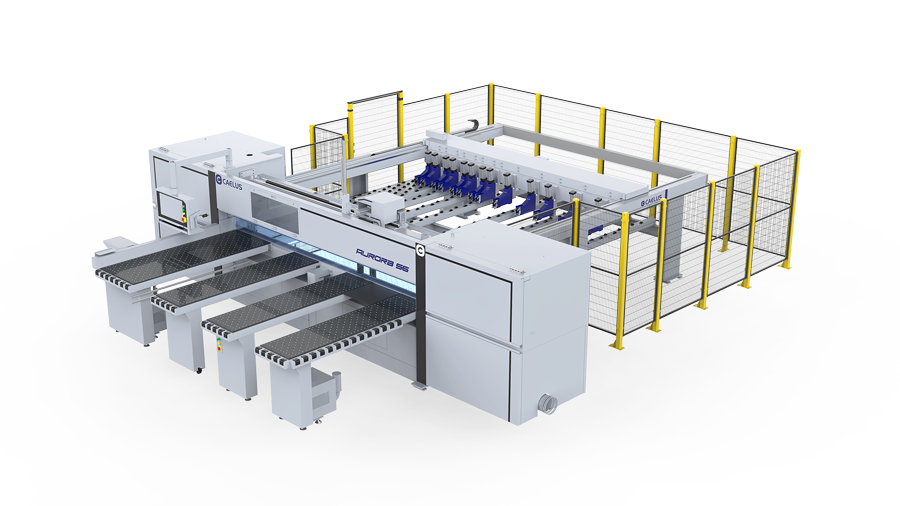
In furniture manufacturing and panel processing, cutting accuracy is not just a technical specification. It directly affects edge banding quality, drilling alignment, assembly precision, material utilization, and the final appearance of cabinets, wardrobes, office furniture, doors, and other panel-based products.
A high-quality panel saw should do more than cut large boards into smaller parts. It should deliver stable dimensions, clean edges, reliable repeatability, and consistent performance during long production shifts. For manufacturers working with MDF, particleboard, plywood, melamine panels, acrylic, PVC, nylon, or composite materials, understanding what affects panel saw cutting accuracy is essential before choosing a machine.
What Is a Panel Saw?
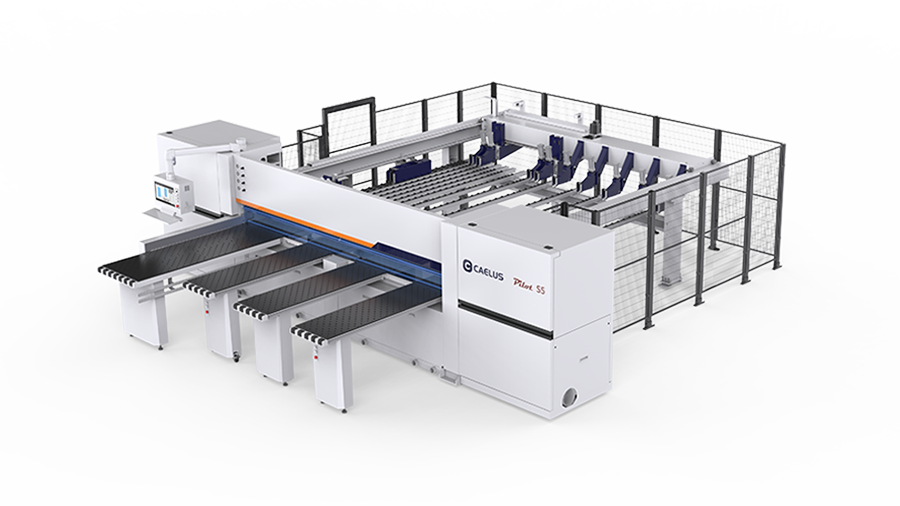
A panel saw is a woodworking machine used to cut large sheet materials into smaller, accurate pieces. It is commonly used in furniture manufacturing, cabinet production, door panel processing, interior decoration, and other industries that need to process large panels efficiently.
In simple terms, a panel saw helps manufacturers cut boards such as MDF, particleboard, plywood, melamine board, laminated panels, acrylic sheets, PVC panels, and composite panels into the required length and width.
Unlike a regular table saw, a panel saw is designed specifically for large-format panels. It provides better support, more stable cutting, and higher repeatability when processing big or heavy boards.
How Does a Panel Saw Work?
A panel saw works by positioning the panel on the machine, fixing it with a fence, clamp, or pressure beam, and then using a rotating saw blade to cut the material along a straight line.
In an automatic or CNC panel saw, the process may include:
- Loading the panel onto the cutting table
- Positioning the panel according to the cutting program
- Clamping or pressing the panel to prevent movement
- Cutting the panel with the main saw blade
- Using a scoring saw to reduce chipping on laminated materials
- Repeating the cutting cycle for batch production
The purpose is to make each cut accurate, clean, stable, and repeatable.
Main Factors That Affect Panel Saw Cutting Accuracy
1. Machine Frame Rigidity: The Foundation of Stable Cutting
The machine frame is the structural foundation of a panel saw. During cutting, the saw blade, saw carriage, clamps, pressure beam, and panel all generate force and vibration. If the frame is not rigid enough, the machine may vibrate, deform slightly, or lose stability over time.
A heavy-duty machine frame helps improve:
- Cutting stability
- Vibration resistance
- Long-term structural reliability
- Straight-line cutting performance
- Accuracy during high-load production
For industrial furniture manufacturers, long-term accuracy is more important than short-term test results. A machine may cut well when new, but if the frame is weak, accuracy can decline after months of continuous use.
When evaluating a panel saw, buyers should ask whether the machine frame has undergone proper processing, stress relief, machining, and quality inspection.
2. Guide Rail and Saw Carriage Precision
The saw carriage determines the movement path of the saw blade. If the guide rail is not straight, rigid, smooth, or dust-resistant, the cutting line may deviate.
A high-quality saw carriage guiding system should provide:
- Smooth linear movement
- High rigidity during cutting
- Low vibration
- Strong dust resistance
- Stable accuracy during repeated cycles
For automatic panel saws and CNC panel saws, the guide rail system is especially important because cutting speed is higher and production cycles are more frequent.
If the saw carriage has backlash, uneven movement, or contamination from dust and chips, the cut edge may become rough, wavy, or dimensionally unstable.
3. Saw Blade Quality and Condition
The saw blade is one of the most important factors affecting panel saw cutting accuracy. Even if a panel saw has a heavy-duty frame, precise guide rails, and an advanced control system, the final cutting result still depends heavily on the blade that actually touches the material.
A suitable, sharp, and correctly installed saw blade helps produce accurate dimensions, clean edges, smooth cutting surfaces, and stable repeatability. On the other hand, a poor-quality or worn saw blade can cause chipping, burning, rough edges, vibration, increased cutting resistance, and unstable cutting accuracy.
For furniture manufacturers, choosing the right panel saw blade is not only about improving cutting quality. It also helps reduce material waste, protect the machine spindle, extend tool life, and improve overall production efficiency.
4. Main Saw and Scoring Saw Alignment
For laminated panels, melamine boards, decorative panels, and double-sided panels, the scoring saw plays a key role in reducing bottom-side chipping.
The scoring saw creates a shallow pre-cut before the main saw completes the cut. When adjusted correctly, it helps produce cleaner edges and better surface quality.
However, if the scoring saw is not properly aligned with the main saw, problems may appear:
| Problem | Possible Cause |
|---|---|
| Bottom chipping | Scoring saw depth too shallow |
| Double cutting line | Scoring saw not aligned with main saw |
| Wide kerf | Scoring blade width incorrect |
| Surface tearing | Wrong blade type or dull blade |
| Uneven edge quality | Poor material support or unstable feeding |
5. Motor, Spindle, and Drive System Stability
Cutting accuracy also depends on whether the machine can maintain stable cutting power and movement.
A strong and stable drive system helps ensure:
- Consistent blade speed
- Lower vibration
- Smooth saw carriage movement
- Better cutting surface
- More reliable performance for thick or dense panels
If motor power is insufficient, blade speed may drop during cutting. This can cause rough edges, burning, and unstable dimensions.
The spindle is another critical component. Spindle runout, bearing wear, or poor balance can directly affect blade rotation and cutting precision.
For high-capacity production, servo drive, linear drive, and intelligent control systems can help improve positioning consistency and reduce human error.
6. Feeding Speed and Positioning Accuracy
Feeding speed must match the material, blade type, cutting thickness, and required finish quality.
If the feeding speed is too fast:
- The blade may overload
- Chipping may increase
- The panel may vibrate
- The cut edge may become rough
- Dimensional accuracy may decrease
If the feeding speed is too slow:
- The material may burn
- Heat may build up
- Blade wear may increase
- Production efficiency may drop
Automatic panel saws and CNC panel saws can improve consistency by controlling feed movement, positioning, and cutting sequence through programmed systems.
For batch production, repeatable positioning is often more important than one-time accuracy. The machine must cut the first panel and the hundredth panel with the same level of consistency.
7. Clamping, Pressure Beam, and Panel Support
During cutting, the panel must remain stable. If the material moves even slightly, accuracy will be affected.
A reliable clamping and pressure system helps prevent:
- Panel sliding
- Vibration
- Uneven cutting force
- Dimensional inconsistency
- Chipping caused by unstable support
However, pressure must also be properly controlled. Too little pressure may allow movement. Too much pressure may deform thin panels or leave marks on sensitive surfaces.
For high-precision panel processing, buyers should pay attention to:
- Clamp density
- Pressure beam stability
- Pneumatic system reliability
- Air pressure consistency
- Automatic pressure adjustment options
- Support for different panel thicknesses
Stable clamping is especially important when cutting large panels, thin panels, slippery decorative surfaces, or multiple stacked panels.
Common Panel Saw Cutting Problems and Solutions
Even a high-quality panel saw may produce cutting problems if the blade, machine setup, material, or operation method is not correct. Understanding common panel saw cutting problems can help manufacturers find the cause faster and keep production stable.
1. Inaccurate Cutting Size
If the final panel size is larger or smaller than the target dimension, the problem is usually related to positioning, calibration, or operator input. The back fence, digital positioning system, or cutting program should be checked first. Operators should also confirm whether the saw kerf has been considered and whether the panel is correctly placed against the fence before cutting. Regular calibration and first-piece inspection can help prevent batch size errors.
2. Uneven or Not Straight Cutting Edge
A cutting edge that is not straight may be caused by guide rail wear, saw carriage vibration, unstable feeding, or blade runout. If the saw blade does not move smoothly along the cutting path, the panel edge may become slightly curved or wavy. To solve this problem, check the guide rail, saw carriage, spindle, blade condition, and feeding stability.
3. Chipping on Panel Edges
Edge chipping is common when cutting melamine board, laminated panels, particleboard, or decorative panels. The main causes include a dull blade, wrong blade type, poor scoring saw adjustment, or insufficient panel support. For better edge quality, use a sharp and suitable blade, align the scoring saw with the main saw, and make sure the panel is firmly pressed during cutting.
4. Burn Marks on the Cut Surface
Burn marks usually appear when the blade is dull, dirty, or rotating against too much resistance. A feed speed that is too slow can also generate excessive heat and leave dark marks on the panel edge. Cleaning resin from the blade, sharpening or replacing the blade, and adjusting the feed speed can help reduce burning.
5. Rough Cutting Surface
A rough cutting surface often means the blade tooth geometry is not suitable for the material, the blade is worn, or the machine is vibrating during cutting. MDF, plywood, melamine board, acrylic, and composite panels may require different blade designs. Choosing the correct blade and keeping the saw carriage stable are key to achieving a smooth cutting surface.
6. Poor 90-Degree Cutting Accuracy
If the cut panel is not square, the issue may come from an uncalibrated fence, uneven worktable, incorrect blade angle, or improper machine leveling. This problem can affect cabinet assembly, edge banding, and drilling accuracy. The fence squareness, saw blade verticality, table flatness, and machine level should be checked and adjusted.
7. Inconsistent Sizes in Batch Cutting
When panels cut from the same program have different sizes, the problem is usually related to panel movement, clamping instability, feeding error, or positioning system backlash. The pressure beam, clamps, air pressure, pusher system, and servo positioning system should be inspected. Stable clamping and accurate repeat positioning are essential for batch furniture production.
How Often Should a Panel Saw Blade Be Replaced?
There is no fixed replacement time for every factory. Blade life depends on material type, cutting volume, blade quality, feed speed, maintenance, and whether the blade is used correctly.
A blade cutting abrasive materials such as particleboard or laminated panels may wear faster than one cutting clean plywood. Continuous production also requires more frequent blade inspection.
Instead of replacing blades only according to time, manufacturers should monitor actual cutting performance. If cutting quality drops, vibration increases, or chipping becomes obvious, the blade should be cleaned, sharpened, or replaced.
A practical blade maintenance routine includes:
| Frequency | Recommended Check |
|---|---|
| Every shift | Check visible damage, resin buildup, and cutting quality |
| Daily | Clean blade surface if resin or dust builds up |
| Weekly | Inspect teeth, carbide tips, and cutting performance |
| Monthly | Check blade runout and cutting consistency |
| When quality drops | Sharpen or replace the blade immediately |
Regular blade maintenance helps maintain panel saw accuracy and reduces unexpected production problems.
Best Practices for Maintaining Saw Blade Performance
To keep stable cutting accuracy, operators should follow these best practices:
- Use the correct blade for each material.
- Keep the blade clean and free from resin buildup.
- Do not continue cutting with a dull blade.
- Store blades vertically or with proper protection.
- Avoid blade impact during handling.
- Check blade direction before installation.
- Match the main saw blade with the scoring saw blade.
- Use proper feed speed for the material.
- Inspect blade runout regularly.
- Replace damaged blades immediately.
Good blade management is a simple but powerful way to improve cutting accuracy and reduce production cost.
Conclusion
Panel saw cutting accuracy depends on machine rigidity, guide rail precision, saw blade quality, scoring saw alignment, motor stability, feeding speed, clamping force, and regular maintenance. For furniture manufacturers, accurate panel cutting improves edge banding, drilling, assembly quality, material utilization, and production efficiency. Choosing the right panel saw and maintaining the blade properly helps reduce chipping, burning, size errors, and unstable batch cutting results.
FAQ
Q1. Why is my panel saw not cutting accurately?
A: Inaccurate cutting is often caused by poor machine calibration, guide rail wear, blade runout, unstable clamping, incorrect positioning, or operator input errors. The back fence, saw carriage, blade condition, and cutting program should be checked first.
Q2. What causes chipping when cutting melamine or laminated panels?
A: Chipping is usually caused by a dull blade, wrong blade type, poor scoring saw adjustment, or insufficient panel support. Using a sharp blade and aligning the scoring saw with the main saw can greatly improve edge quality.
Q3. How can I improve panel saw cutting accuracy?
A: To improve accuracy, keep the machine calibrated, use the correct saw blade, check blade sharpness, maintain guide rails, control feeding speed, secure the panel firmly, and inspect the first piece before batch cutting.
Q4. Why does my panel saw leave burn marks on the cut edge?
A: Burn marks are commonly caused by a dull or dirty blade, slow feed speed, resin buildup, or excessive cutting resistance. Cleaning, sharpening, or replacing the blade usually helps solve this problem.
Q5. How often should a panel saw blade be replaced?
A: There is no fixed replacement time. The blade should be replaced or sharpened when cutting quality drops, chipping increases, burn marks appear, vibration becomes stronger, or batch cutting sizes become unstable.