

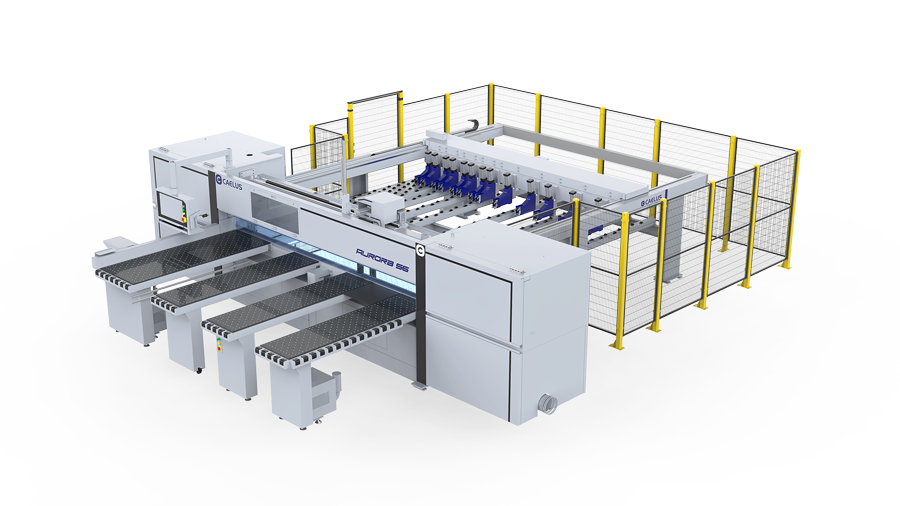
Reducing panel waste during CNC panel saw cutting is not only about buying a more accurate machine. It depends on the full cutting workflow: clean cut-list data, optimized cutting layouts, correct kerf settings, suitable saw blades, stable machine calibration, reusable offcut management, and smart automation between panel storage, cutting, labeling, and downstream processing.
For furniture manufacturers, cabinet factories, wardrobe producers, and panel processing plants, panel waste directly affects material cost, production speed, delivery reliability, and profit margin. A CNC Panel Saw can help reduce unnecessary waste, but the best results come when software, machine settings, operator habits, and production planning work together.
How Do You Reduce Panel Waste During CNC Panel Saw Cutting?
The most effective way to reduce panel waste is to control the cutting process before the saw blade touches the board. In a real furniture factory, waste usually comes from three places: a poor cutting layout, inaccurate machine settings, and reusable offcuts that are not managed properly. A CNC panel saw can help reduce these problems, but only when the cut list, optimization software, blade setup, machine calibration, and offcut system work together.
1. Optimize the Cutting Layout Before Production
Do not start cutting from a manually arranged list unless the job is very simple. For cabinet parts, wardrobe panels, shelves, drawer components, and mixed-size furniture orders, manual planning often leaves too many unusable strips and small offcuts.
Use cut optimization software to arrange parts on each sheet before production. A good cutting plan should consider:
- Sheet size
- Part length and width
- Quantity
- Material type
- Panel thickness
- Grain or texture direction
- Saw kerf
- Edge trimming allowance
- Minimum reusable offcut size
- Cutting sequence
For example, if a factory cuts 18 mm melamine boards for kitchen cabinets, the software can group similar parts together, reduce unnecessary repeated cuts, and create a layout that makes better use of every sheet.
Factory tip: Before sending the program to the CNC panel saw, compare at least two cutting plans: one optimized for material yield and one optimized for cutting speed. The lowest-waste layout is not always the best choice if it slows down production too much.
2. Set the Correct Saw Kerf
Kerf is the width of material removed by the saw blade. It looks small, but it adds up quickly in batch production.
If the kerf value is wrong in the software, the cutting plan may look correct on the screen but produce inaccurate parts on the machine. This can lead to undersized panels, poor assembly, re-cutting, and extra scrap.
Before cutting, check:
| Kerf Checkpoint | Why It Matters |
|---|---|
| Actual blade thickness | Prevents wrong part dimensions |
| Kerf value in the software | Keeps the layout accurate |
| Blade condition | A worn blade may cut wider or less cleanly |
| Material type | Different panels may need different blade setups |
| First-piece measurement | Confirms the setting before full production |
A thin-kerf blade can reduce material loss, but it should not be selected only because it is thinner. The blade still needs to be stable enough for the panel thickness, feed speed, and surface finish requirement.
3. Use Common-Line Cutting When the Parts Allow It
Common-line cutting means two adjacent parts share one cutting line. Instead of leaving a gap between parts and cutting each edge separately, the saw uses one blade pass to separate both parts.
This helps reduce waste because the saw kerf is used once instead of twice.
Common-line cutting works well for:
- Cabinet side panels
- Shelves
- Drawer parts
- Wardrobe panels
- Repeated rectangular components
- Batch production with similar part sizes
However, it should not be used blindly. If the parts have different grain directions, different edge banding requirements, or different surface finish directions, common-line cutting may create problems later in edge banding, drilling, or assembly.
4. Standardize Part Sizes Where Possible
Some waste is created long before cutting begins. If every furniture design uses slightly different panel dimensions, the cutting software has fewer chances to build an efficient layout.
When product design allows, standardize common part sizes. For example:
- Use repeated shelf depths.
- Keep cabinet side panel widths consistent.
- Design drawer parts around standard sizes.
- Match product modules to common sheet sizes.
- Avoid unnecessary custom dimensions.
This does not mean every product must look the same. It means the internal structure should use repeatable dimensions wherever possible. Standard parts are easier to nest, easier to batch, and easier to cut with fewer leftovers.
5. Keep the Panel Saw Properly Aligned and Calibrated
A perfect cutting plan is useless if the machine is not cutting accurately. Even a small alignment error can create a full batch of panels that are slightly out of size.
Check these areas regularly:
- Side fence squareness
- Back pusher accuracy
- Clamp pressure
- Pressure beam condition
- Main saw alignment
- Scoring saw alignment
- Blade sharpness
- Dust buildup around guides and measuring points
For laminated panels and melamine boards, scoring saw alignment is especially important. If the scoring blade and main blade are not aligned, the panel edge may chip. Once the edge is damaged, the part may need to be re-cut even if the size is correct.
Factory tip: Always inspect the first piece before running the full batch. Measure the length, width, diagonal, edge quality, and squareness. This small step can prevent dozens of wrong parts.
6. Separate Reusable Offcuts From Scrap
Many factories lose money because they treat all leftover pieces as waste. In reality, some offcuts are still usable for smaller parts, drawer components, fillers, sample panels, or future custom orders.
Set a clear rule for reusable offcuts. For example, any offcut larger than the factory’s minimum useful size should be labeled and stored instead of thrown away.
A useful offcut label should include:
- Material type
- Thickness
- Length and width
- Color or finish
- Grain direction
- Date
- Source order
- Storage location
The key is to make offcuts searchable. If operators cannot quickly find and identify a leftover piece, they will usually open a new sheet instead.
7. Build a Repeatable Waste-Reduction Routine
Reducing panel waste is not a one-time adjustment. It should become part of the daily cutting routine.
Use this checklist before every production batch:
- Confirm the cut list is correct.
- Check material type, thickness, and grain direction.
- Run the cutting optimization.
- Set the correct kerf.
- Check blade and scoring saw condition.
- Clean the cutting area.
- Cut and inspect the first piece.
- Label finished parts and reusable offcuts.
- Record scrap reasons after production.
When this routine is followed every day, a CNC panel saw does more than cut panels faster. It helps the factory use material more intelligently, reduce rework, improve part consistency, and lower the cost of each finished panel.
What Is a CNC Panel Saw?
A CNC Panel Saw is a computer-controlled cutting machine designed to cut large panels into accurate sizes. It is commonly used in furniture manufacturing, cabinet production, wardrobe manufacturing, office furniture production, and panel processing.
A typical CNC Panel Saw can process materials such as:
- MDF
- Particle board
- Plywood
- Melamine board
- Laminated board
- Veneered panel
- Chipboard
- OSB
- Other wood-based panels
The machine usually uses a main saw blade for cutting and a scoring saw blade to reduce chipping on laminated or decorative panels. With CNC control, servo feeding, pressure beam clamping, and cutting optimization software, it can cut panels faster and more consistently than manual cutting methods.
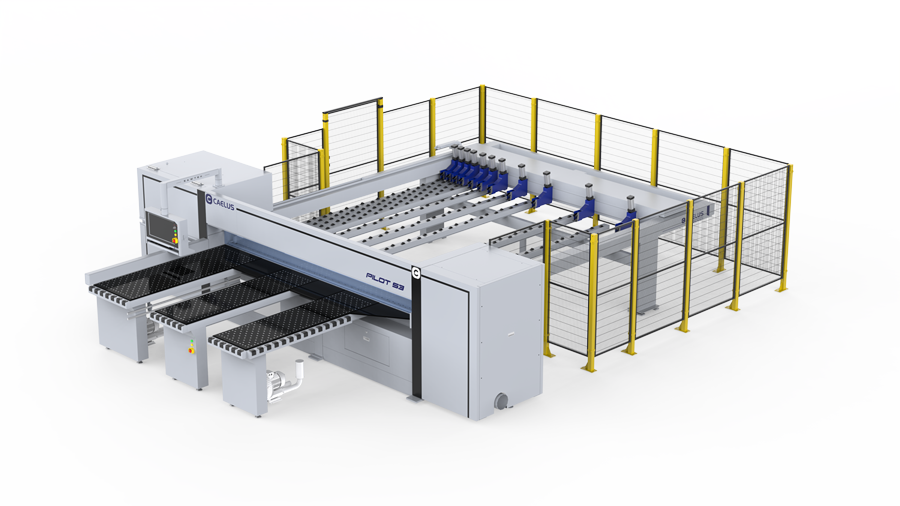
How Caelus Helps Furniture Manufacturers Choose the Right Cutting Solution
Caelus provides intelligent woodworking machinery and automated furniture manufacturing solutions for modern panel processing factories.
For factories that need high-speed and high-precision panel sizing, Caelus CNC Panel Saw solutions can support stable cutting, intelligent control, cutting optimization, labeling, and connection with automated production systems.
For factories moving toward smart production, Caelus can also provide automated panel storage, cutting automation, edge banding, drilling, and complete production line solutions.
Instead of choosing a machine only by name, Caelus helps manufacturers evaluate the full workflow:
- How panels are stored
- How materials are selected
- How cut lists are processed
- How panels are cut
- How parts are labeled
- How parts move to edge banding
- How drilling and assembly data are connected
- How automation can be upgraded later
This makes it easier to build a production system that fits real manufacturing needs.
Conclusion
Reducing panel waste during CNC panel saw cutting is a workflow issue, not just a machine issue. Start with accurate cut-list data, optimize each sheet layout, set the correct kerf, use the right blade and scoring saw, calibrate the panel saw regularly, and manage reusable offcuts as inventory. When software, operators, machine settings, labeling, and storage work together, factories can cut more usable parts from every panel, reduce rework, lower production cost, and improve delivery reliability.
FAQ
Q1. What is the best way to reduce panel waste during CNC panel saw cutting?
A: The best way is to optimize the cutting layout before production, set the correct saw kerf, use suitable blades, inspect the first cut piece, and reuse offcuts whenever possible. A CNC panel saw works best when the software, machine settings, and shop-floor workflow are managed together.
Q2. Does cut optimization software really reduce material waste?
A: Yes. Cut optimization software arranges parts on each sheet based on panel size, part quantity, kerf, grain direction, and cutting sequence. This helps the factory use more of each board and reduce unusable leftover pieces.
Q3. Why is kerf important in panel saw cutting?
A: Kerf is the material removed by the saw blade. If the kerf value is not set correctly in the software, parts may be cut too small or the layout may become inaccurate. This can cause re-cutting, poor assembly, and extra scrap.
Q4. How can offcuts be reused in furniture production?
A: Reusable offcuts should be labeled with material type, thickness, size, color, grain direction, and storage location. They can be used later for drawer parts, fillers, shelves, sample panels, or small custom orders.
Q5. What causes chipping during CNC panel saw cutting?
A: Chipping is often caused by a dull blade, incorrect scoring saw alignment, unstable clamping, wrong feed speed, or poor panel support. For melamine and laminated panels, the scoring saw must be adjusted carefully to protect the surface edge.