

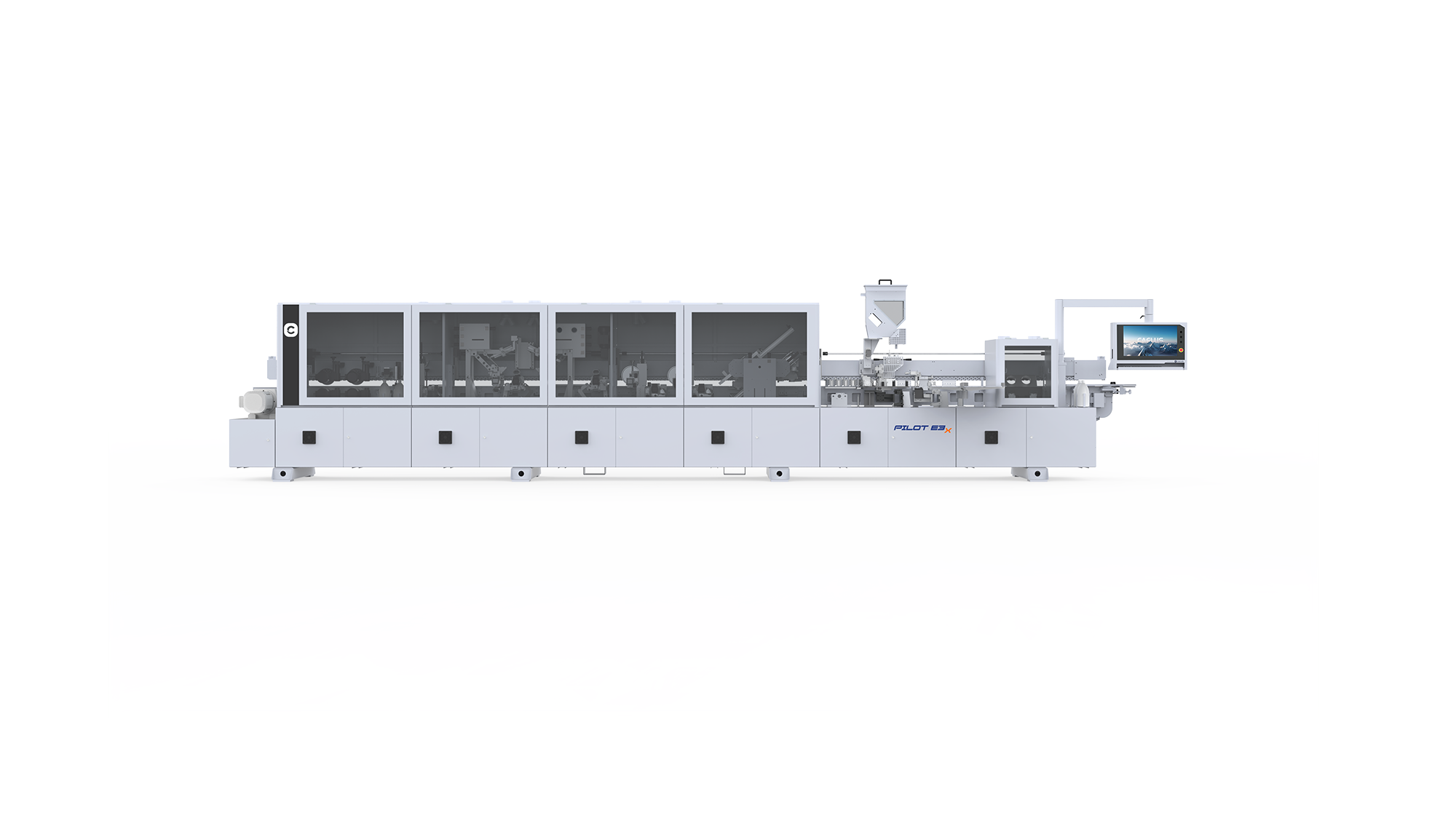
Edge Bander
 Edge Bander

How Does an Automated Edge Banding Line Work?

image-20260507093341-2

In modern panel furniture production, edge banding is no longer just a finishing step. It has become one of the key processes that determines product appearance, moisture resistance, durability, and factory output.

For cabinet manufacturers, wardrobe producers, office furniture factories, and custom furniture workshops, a stable edge banding process can reduce rework, improve edge quality, and make production flow more predictable. 

An automated edge banding line combines an edge bander with panel feeding, conveying, return handling, intelligent adjustment, and sometimes barcode-based production management. Instead of treating edge banding as an isolated machine operation, the line connects panel movement, glue application, edge tape feeding, trimming, scraping, polishing, and workpiece return into one continuous workflow.


What Is an Automated Edge Banding Line?

An automated edge banding line is a production system designed to apply edge banding material to the exposed edges of wood-based panels, trim the excess material, finish the edge surface, and move the panel to the next operation with minimal manual handling.

At the center of the line is the edge bander. Around it, the factory may add feeding tables, return conveyors, automatic loading and unloading systems, multi-machine inline layouts, barcode recognition, or production scheduling systems. A basic edge bander focuses on the edge finishing process itself. An automated edge banding line focuses on the entire production flow around edge banding.

Edge Bander

Edge bander

Where Is an Automated Edge Banding Line Used?

Automated edge banding lines are widely used in panel-based furniture manufacturing, especially where quality consistency and production capacity are important.

Typical applications include:

  • Kitchen cabinet production
  • Wardrobe and closet manufacturing
  • Office furniture production
  • Commercial furniture manufacturing
  • Customized panel furniture
  • Door panel and drawer front processing
  • Large-scale panel furniture factories
  • Flexible manufacturing lines for mixed orders

In these applications, the finished edge is not only decorative. It protects the board core, improves moisture resistance, reduces edge damage, and gives the finished product a more refined appearance.


Main Components of an Automated Edge Banding Line

Although different factories use different layouts, most automated edge banding lines include several core sections. Understanding these sections helps buyers evaluate machine quality more accurately.

1. Panel Feeding System

The feeding system sends panels into the edge bander at a stable speed and angle. In smaller workshops, feeding may still be manual. In more automated production, the line may use lifting tables, conveyors, vacuum loading units, or automatic panel transfer systems.

Good feeding is the beginning of good edge banding. If the panel enters the machine at an unstable angle, later processes such as gluing, pressing, trimming, and corner rounding will also be affected.

2. Panel Alignment and Conveyor System

Once the panel enters the machine, the alignment and conveyor system keeps it moving along a controlled path. This usually involves guide rails, pressure beams, chain tracks, and pressing devices.

A rigid conveyor structure is especially important for high-speed edge banding. When the feed speed increases, even small vibration or panel movement may affect glue line stability and trimming quality.

3. Pre-Milling Unit

The pre-milling unit prepares the panel edge before glue is applied. It removes saw marks, small chips, and minor dimensional errors caused by cutting.

This step is often underestimated. In reality, edge banding quality begins before gluing. A clean and straight panel edge allows the glue to spread more evenly and helps the edge tape bond more tightly.

Pre-milling is particularly useful for:

  • High-gloss panels
  • Laminated boards
  • Cabinet doors
  • Visible furniture surfaces
  • Panels cut by different saw systems
  • Production where edge quality must be consistent batch after batch

4. Gluing Unit

The gluing unit applies hot melt adhesive to the panel edge or edge banding material. The most common glue systems include EVA and PUR. Higher-end applications may use hot air or laser edge banding for a near zero-glue-line appearance.

Glue quality depends on several factors:

  • Glue type
  • Glue temperature
  • Glue amount
  • Glue roller accuracy
  • Panel edge cleanliness
  • Feed speed
  • Pressing pressure
  • Ambient temperature and humidity

For standard furniture, EVA is often chosen because it is cost-effective and easy to operate. For kitchens, bathrooms, laboratories, and premium cabinets, PUR is often preferred because it provides stronger moisture and heat resistance.

5. Edge Tape Feeding System

The edge tape feeding system delivers edge banding material into the pressing zone. Common edge banding materials include PVC, ABS, PP, melamine, veneer, acrylic, and solid wood strips.

For flexible production, automatic edge tape switching can save time when factories frequently change board colors, tape thicknesses, or customer orders. This is useful in custom furniture manufacturing, where one production shift may involve many different panel sizes and finishes.

6. Pressure Rollers

After glue application, the edge tape is pressed tightly onto the panel edge by pressure rollers. The first roller usually provides the main bonding force, while the following rollers help stabilize the bond and control the edge tape position.

Pressure must be accurate. Too little pressure may cause weak bonding or open edges. Too much pressure may create glue squeeze-out, surface marks, or deformation on sensitive panels.

7. End Trimming Unit

The end trimming unit cuts off the excess edge banding at the front and rear of the panel. This operation must be fast, clean, and synchronized with panel movement.

Poor end trimming can cause chipped corners, uneven ends, or impact marks. In high-speed production, end trimming stability becomes one of the most important indicators of machine quality.

8. Rough Trimming and Fine Trimming Units

After the front and rear ends are cut, the upper and lower excess edge banding is removed by trimming units.

Rough trimming removes most of the excess material. Fine trimming creates the final edge profile, such as a straight edge, chamfer, or radius.

For factories that process different edge tape thicknesses, automatic positioning and profile adjustment can reduce setup time and improve repeatability.

9. Corner Rounding Unit

Corner rounding, also known as corner trimming or profile tracking, processes the four corners of the panel. It creates a smooth transition between the front, rear, upper, and lower edges.

This function is important for:

  • Cabinet doors
  • Drawer fronts
  • Wardrobe panels
  • High-end furniture fronts
  • Panels with visible external corners

A well-adjusted corner rounding unit improves both appearance and touch. It also reduces sharp corners that may affect user experience.

10. Edge Scraping and Glue Scraping Units

Scraping removes fine tool marks left by trimming. It helps create a smoother radius and more consistent edge surface.

Glue scraping removes excess glue from the glue line area. This is especially important for dark panels, high-gloss surfaces, and premium furniture where visible glue residue is not acceptable.

11. Buffing and Polishing Unit

The buffing unit uses polishing wheels to clean and brighten the edge surface. It removes light residue and improves the final appearance.

For high-gloss panels, deep-color boards, and decorative surfaces, buffing has a direct impact on the perceived quality of the finished furniture.

12. Return Conveyor or Panel Handling System

In an automated edge banding line, the return conveyor or handling system brings the panel back to the operator or transfers it to the next process.

This reduces manual carrying, improves ergonomics, and helps one operator manage more production tasks. In more advanced systems, the line can connect with panel saws, storage systems, drilling machines, and sorting systems.

CAELUS Edge Automation Solutions are positioned around this kind of system-level integration, using high-performance edge banders with automation modules to create a more continuous edge banding workflow.


How an Automated Edge Banding Line Works in Real Production

An automated edge banding line is designed to keep panels moving through a controlled sequence of machining, bonding, trimming, and finishing operations. Each section of the line has a specific role, and the final edge quality depends on how well these sections work together.

1. Panel Infeed and Workpiece Positioning

The process begins when the panel is placed onto the infeed section of the edge banding line. Depending on the factory layout, this can be done manually, by a feeding table, or through an automatic loading system.

At this stage, accurate panel positioning is critical. The panel must enter the machine at the correct angle and remain firmly against the guide system. If the workpiece is not aligned properly at the beginning, later processes such as gluing, trimming, and corner rounding may become inconsistent.

A stable infeed system helps ensure:

  • Straight panel movement
  • Consistent distance from the machining units
  • Reduced edge defects
  • More reliable processing at higher feed speeds

For factories producing cabinets, wardrobes, or customized panels, stable infeed is especially important because panel sizes often change from one order to another.

2. Edge Preparation Before Gluing

Before glue is applied, the panel edge usually passes through the pre-milling unit. This unit removes saw marks, small chips, and minor unevenness left from panel cutting.

This is one of the most important stages in the entire edge banding process. A clean, straight, and fresh panel edge allows the glue to bond more evenly with the board and the edge banding material.

Without proper edge preparation, manufacturers may experience:

  • Visible glue lines
  • Weak bonding
  • Uneven edge tape contact
  • Chipping after trimming
  • Poor appearance on high-gloss or dark panels

Pre-milling is strongly recommended when processing laminated boards, high-gloss panels, cabinet doors, and other visible furniture parts where edge quality is a major concern.

3. Controlled Glue Application

After edge preparation, the gluing unit applies adhesive to the panel edge. In most furniture production lines, EVA or PUR hot melt glue is used. Some high-end applications may use hot air or laser edge banding technology for a cleaner visual result.

The goal of this stage is to apply the right amount of glue at the right temperature. Too much glue can create a visible glue line or leave residue on the panel surface. Too little glue can reduce bonding strength and cause the edge banding to peel off later.

Several factors influence glue performance:

  • Glue type
  • Glue temperature
  • Glue viscosity
  • Feed speed
  • Panel material
  • Edge tape thickness
  • Pressure roller setting
  • Ambient temperature in the workshop

For standard furniture, EVA glue is often sufficient. For kitchen cabinets, bathroom furniture, and other products exposed to moisture or heat, PUR glue is usually a better choice.

4. Edge Tape Feeding and Pressing

Once glue has been applied, the edge banding material is automatically fed into the pressing area. The edge tape must arrive at the correct time and position so that it bonds accurately with the glued panel edge.

The pressure roller system then presses the edge tape tightly against the panel. The first roller usually provides the main bonding force, while the following rollers stabilize the tape and improve contact along the full edge.

This stage directly affects bonding strength. If the pressure is too low, the edge may not bond properly. If the pressure is too high, glue may be squeezed out excessively, or sensitive panel surfaces may be marked.

A well-designed pressing section helps achieve:

  • Strong adhesion
  • Uniform glue distribution
  • Clean edge appearance
  • Reduced risk of open edges
  • Stable bonding at continuous production speed

5. Front and Rear End Trimming

After the edge tape is bonded to the panel, the excess material at the front and rear ends must be removed. This is done by the end trimming unit.

The end trimming unit cuts the edge banding flush with the panel ends. The movement must be fast, accurate, and synchronized with the panel feed speed.

Poor end trimming can lead to:

  • Chipped panel corners
  • Uneven front or rear edges
  • Impact marks
  • Excess tape remaining at the panel ends
  • Extra manual repair work

For high-speed edge banding lines, end trimming stability is one of the key indicators of machine performance.

6. Upper and Lower Edge Trimming

After end trimming, the panel moves through the rough trimming and fine trimming units. These units remove the excess edge banding from the upper and lower sides of the panel.

Rough trimming removes most of the extra material, while fine trimming creates the final edge profile. Depending on the furniture design, the edge can be finished as a straight edge, chamfer, or radius.

This stage determines the shape and consistency of the finished edge. It is especially important when processing thicker PVC edge banding, ABS edge banding, acrylic edge banding, or panels with visible decorative surfaces.

Factories that frequently change edge tape thickness should pay attention to machine adjustment speed and repeatability. Servo-controlled adjustment can reduce manual setup time and improve consistency across different orders.

7. Corner Rounding and Profile Finishing

For panels such as cabinet doors, drawer fronts, and wardrobe fronts, corner rounding is often required. The corner rounding unit processes the front and rear corners to create a smooth, continuous profile.

This improves both appearance and touch. A sharp or uneven corner can make the finished product look unfinished, even if the straight edge is well processed.

Corner rounding quality depends on:

  • Tool sharpness
  • Panel stability
  • Feed speed
  • Edge tape thickness
  • Radius setting
  • Tracking accuracy

For manufacturers producing high-end visible panels, corner rounding is not just an optional function. It is an important part of the finished product quality.

8. Scraping for a Clean and Smooth Edge

After trimming and corner rounding, the edge may still have small tool marks or slight irregularities. The scraping unit removes these fine marks and refines the edge radius.

There are usually two types of scraping operations:

Radius scraping improves the smoothness of the profiled edge.
Glue scraping removes excess glue near the glue line.

This stage is especially important for dark panels, high-gloss panels, and premium furniture surfaces, where small glue marks or cutting lines are easy to notice.

A properly adjusted scraping unit can reduce manual cleaning and improve the visual consistency of the final product.

9. Buffing and Final Surface Cleaning

The final finishing stage is buffing or polishing. Buffing wheels clean the edge area, remove light residue, and improve the surface appearance.

Although buffing may seem like a small step, it has a strong effect on the final impression of the panel. A clean, polished edge gives the furniture a more professional and refined look.

This stage is particularly valuable for:

  • High-gloss panels
  • Dark color boards
  • Acrylic edge banding
  • Premium cabinet doors
  • Decorative visible surfaces

After buffing, the panel edge should be clean, smooth, and ready for the next production process.

10. Panel Return, Transfer, or Sorting

After the edge is finished, the panel leaves the edge bander. In a simple line, the operator may collect the panel manually. In an automated line, the panel may be returned to the operator, transferred to another edge bander, sent to drilling, or moved to a sorting or stacking system.

A return conveyor is commonly used when one operator needs to manage the edge banding process more efficiently. It reduces manual carrying and keeps the production rhythm more stable.

In more advanced production layouts, the edge banding line can be connected with panel saws, storage systems, drilling machines, and production management software. This allows the factory to build a more continuous and intelligent panel processing workflow.


What Determines Edge Banding Quality?

A good edge bander is important, but the machine alone does not determine the final result. Edge quality is influenced by the entire production environment.

1. Panel Cutting Quality: If the panel edge is chipped, uneven, or dimensionally inaccurate after cutting, the edge bander must compensate for those defects. Pre-milling helps, but it cannot solve every cutting problem. A stable cutting process before edge banding will always improve final edge quality.

2. Board Material: Different boards behave differently during edge banding. MDF, particle board, plywood, laminated board, acrylic board, and high-gloss panels all respond differently to heat, pressure, trimming, and polishing. For example, high-gloss panels require careful surface protection and clean polishing. Particle board may require more attention to edge preparation and glue penetration.

3. Edge Banding Material: PVC, ABS, veneer, acrylic, and solid wood edge banding materials each require different handling. Tape thickness, flexibility, surface coating, and color matching all affect the final result. A factory that processes many edge tape types should choose a machine with flexible feeding and adjustment functions.

4. Glue Temperature and Glue Amount: Glue temperature must remain stable. If the temperature is too low, bonding strength may drop. If the temperature is too high, the glue may degrade or create excessive squeeze-out.

Glue amount also matters. Too much glue makes the glue line visible and increases cleaning work. Too little glue can cause weak bonding or peeling.

5. Dust Extraction: Pre-milling, trimming, scraping, and buffing all create dust and chips. If dust is not removed properly, it can contaminate the glue line, affect machine stability, and reduce finished edge quality. A properly designed dust extraction system is not optional for industrial edge banding. It is part of the process.


Types of Automated Edge Banding Lines

1. Single-Machine Edge Banding Line

This is the most common starting point. A factory uses one automatic edge bander with manual feeding and unloading, or with a simple return conveyor.

It is suitable for small and medium factories that want better quality and efficiency without building a fully automated production line.

2. Edge Bander with Return Conveyor

This layout is common in cabinet and wardrobe production. The return conveyor brings the panel back to the operator after one edge is finished.

It reduces walking distance, lowers manual handling, and improves production rhythm.

3. Two-Machine Edge Banding Line

A two-machine line can process panels more efficiently by dividing edge banding tasks between two machines. This is useful when production volume increases and one machine becomes a bottleneck.

4. Four-Machine Edge Banding Line

A four-machine edge banding line is designed for higher output and more continuous production. It is more suitable for large panel furniture factories, standardized product lines, or factories upgrading toward intelligent manufacturing.

CAELUS already lists Pilot E6 two-machine and four-machine edge banding line solutions under its Edge Automation Solutions category, which makes this article a good internal-linking opportunity for those pages.


How to Choose the Right Automated Edge Banding Line

Choosing an automated edge banding line should start with production requirements, not machine appearance.

1. Define Your Production Capacity

Before selecting a machine, calculate:

  • How many panels do you process per shift?
  • How many edges does each panel need?
  • Do you run one shift or two shifts?
  • Are your orders standardized or customized?
  • How often do you change panel size, tape color, or edge thickness?

Factories with stable high-volume production need speed and automation. Custom furniture factories need flexibility and fast changeover.

2. Check Panel Size and Thickness

The machine must match your actual workpiece range. Important specifications include:

  • Minimum panel length and width
  • Maximum panel size
  • Workpiece thickness range
  • Edge banding thickness range
  • Corner rounding minimum size
  • Feed speed under different processes

Do not choose only by maximum speed. A machine that handles your real panel mix reliably is more valuable than a machine that only looks fast on paper.

3. Match the Glue System to Your Product

For standard furniture, EVA may be enough.
For kitchen and bathroom cabinets, PUR is usually a better option.
For premium panels, hot air or laser technology may be worth considering.

A factory with different product grades may need a machine that supports multiple glue systems or quick process switching.

4. Evaluate Automation Level

Not every factory needs a fully automated line immediately. A practical upgrade path may look like this:

Factory Stage Recommended Configuration
Small workshop Compact automatic edge bander
Growing cabinet factory Edge bander with return conveyor
Medium furniture factory High-speed edge bander with automatic adjustment
Large production plant Two-machine or four-machine edge banding line
Smart factory Edge banding line integrated with storage, cutting, and drilling systems

5. Consider Operator Skill and Maintenance

A good automated line should reduce operator difficulty, not increase it.

  • Clear control interface
  • Automatic pressure beam positioning
  • Servo adjustment
  • Easy glue system maintenance
  • Convenient tool replacement
  • Reliable lubrication
  • Accessible dust extraction points
  • Practical training and after-sales support


Maintenance Tips for Automated Edge Banding Lines

Stable edge banding depends on daily maintenance. Even a high-end machine will lose accuracy if glue, dust, and tool wear are ignored.

Daily Maintenance

  • Clean glue residue around the glue pot
  • Check pressure rollers
  • Clean the conveyor chain and guide areas
  • Inspect trimming and scraping units
  • Check buffing wheels
  • Confirm air pressure
  • Make sure dust extraction is working properly

Weekly Maintenance

  • Inspect tool wear
  • Check scraper blades
  • Clean sensors and limit switches
  • Check lubrication points
  • Inspect the edge tape feeding system
  • Check chain tension and panel conveying stability

Monthly Maintenance

  • Check trimming and corner rounding accuracy
  • Inspect spindle condition
  • Back up machine parameters
  • Check electrical cabinet cleanliness
  • Inspect return conveyor alignment
  • Review glue system condition

Good maintenance reduces downtime, improves edge consistency, and protects long-term machine accuracy.


Why Choose CAELUS for Automated Edge Banding Solutions?

CAELUS focuses on intelligent woodworking machinery for modern furniture manufacturing. Its product range covers edge banders, panel saws, panel storage systems, automated furniture manufacturing solutions, and testing equipment for edge banding quality.

For edge banding, CAELUS provides both standalone machines and automation-oriented solutions. The edge bander product line is designed for panel furniture, cabinets, wardrobes, office furniture, and other furniture manufacturing scenarios.

Depending on production requirements, manufacturers can choose from different edge banding configurations, including EVA, PUR, laser options, servo positioning, automatic pressure beam positioning, multi-slot edge feeding, high-speed end trimming, corner rounding, scraping, buffing, and automation integration.

For factories planning to upgrade from manual or semi-automatic edge banding to an automated line, CAELUS can help evaluate the production process from a system perspective: cutting, storage, edge banding, drilling, handling, and overall factory layout.


Conclusion

Automated edge banding lines improve panel furniture production by connecting feeding, alignment, pre-milling, glue application, edge tape pressing, trimming, corner rounding, scraping, buffing, and return handling into one stable workflow. With the right edge bander configuration, cabinet, wardrobe, and furniture manufacturers can reduce rework, improve edge quality, support flexible production, and increase overall factory efficiency.
