

In 2026, automated furniture manufacturing is reshaping the entire industry landscape with an irreversible momentum. In the past, traditional furniture manufacturing relied heavily on skilled manual labor—a model that now faces severe challenges: labor costs are rising drastically year after year, production efficiency struggles to break through existing bottlenecks, and product consistency remains poor due to the prevalence of human error. These pain points are continuously eroding corporate profit margins.
Faced with increasingly stringent market demands regarding product quality and delivery timelines, automation technology is comprehensively replacing traditional manual processes. From advanced CNC machines to intelligent storage systems and high-precision automated edge banding systems, modern factories are undergoing a radical genetic restructuring. All of this leads to a core question: How exactly is automation transforming the panel processing workflow and the entire furniture production ecosystem? This article provides an in-depth analysis.
What Is Automated Furniture Manufacturing?
Simply put, automated furniture manufacturing refers to the use of advanced CNC machines, robotic arms, conveyor systems, and underlying data interconnection networks to achieve fully automated production—from the moment raw materials enter storage to the moment finished products roll off the line. It breaks down the "silo effect" often associated with standalone machinery, enabling data and material flows to move seamlessly and at high speeds throughout the workshop.
Key Stages Covered by Automation
In modern furniture factories, automation has permeated every capillary of the production process, primarily covering four key stages:
First is the upstream panel storage stage, responsible for the intelligent scheduling and storage of raw materials; second is the core cutting process, executed by high-speed CNC panel saws or beam saws; next is edge processing, where high-precision edge banders handle the finishing touches; and finally, rigorous quality control, which includes automated banding tests and tensile strength tests to ensure outgoing product quality.
An Analysis of Core Equipment in Automated Production Lines
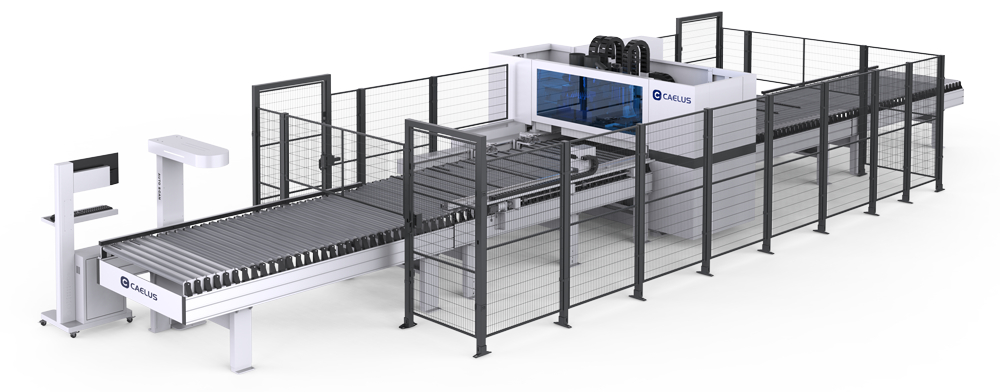
Automated CNC 6 Sided Drilling Solution
Achieving true automation is impossible without the support of industry-leading hardware. As a global leader in intelligent furniture production line solutions, Caelus offers a comprehensive matrix of core equipment.
Panel Storage System (Intelligent Warehouse)
This serves as the "super-brain" and logistical hub of the automated production line. Caelus's panel storage system enables the automated storage, dynamic buffering, and intelligent sorting of panel materials. It vastly improves the utilization of vertical space within the factory and completely eliminates the arduous and damage-prone manual handling of heavy panels—a common feature of traditional manufacturing models. Based on production orders, the system precisely delivers the required panels—spanning a variety of finishes and dimensions—to the cutting stations in advance.
CNC Panel Saw & Beam Saw
Cutting is the foundational step that determines the dimensional accuracy of furniture. The CNC panel saws provided by Caelus feature exceptional digital control precision, enabling them to flawlessly handle complex and highly variable custom orders. For the high-volume production of standard components, our heavy-duty beam saws facilitate high-speed stack cutting of multiple panels simultaneously. When paired with intelligent layout optimization software, these two types of equipment push material utilization to its absolute limit, significantly reducing material waste.
Edge Bander
Once panels have been cut, they must undergo a flawless edge-banding process. Caelus's industrial-grade edge banders execute the entire sequence in a single, seamless operation: pre-milling, automatic glue application, edge banding, end trimming, fine trimming, scraping, and polishing. Whether handling standard straight edges or working with extra-thick edge banding tapes, the high-precision servo pressure roller system ensures top-tier product quality—free of visible glue lines or burrs.
CNC Machine (Machining Center)
Upon completion of the edge banding process, the panels proceed to the CNC machining center. These highly automated CNC machines are capable of performing six-sided drilling, grooving, and intricate surface carving in a single pass, thereby vastly expanding the creative possibilities and design language of the furniture.
Analysis of the Fully Automated Panel Processing Workflow
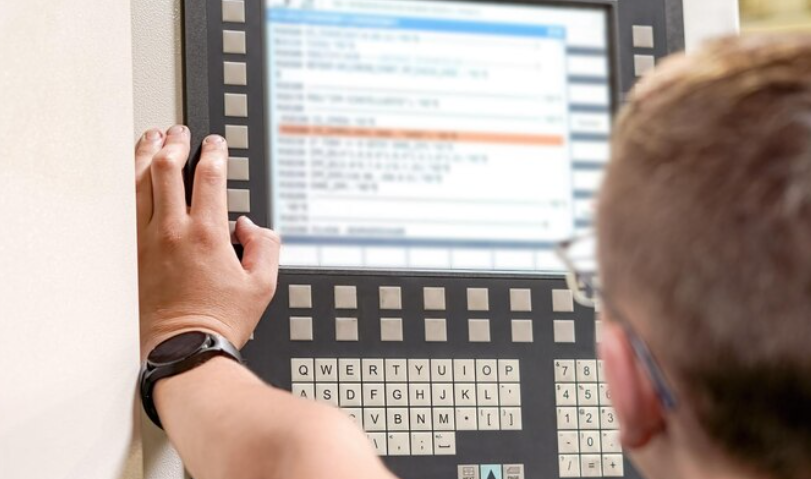
Within the framework of Automated Furniture Manufacturing, panel processing is no longer a disjointed patchwork of isolated steps, but rather a fluid, seamless relay race.
The complete automated workflow unfolds as follows: First, acting on instructions issued by the MES (Manufacturing Execution System), the automated panel storage system smoothly conveys the specified panels to the infeed table. Subsequently, either a CNC panel saw or a beam saw executes a precise, error-free cut based on the optimal layout plan. The cut panels are then transported via an automated roller conveyor system directly into the edge bander for automatic edge application on all four sides. Next, the panels move on to the CNC machining center to undergo all necessary drilling and precision finishing operations. Finally, they enter the automated quality inspection zone. This seamless integration model significantly reduces manual intervention, establishing a compact and controllable production rhythm that serves as the absolute core of modern, high-end furniture manufacturing.
Table 1: Workflow Comparison in Panel Processing
|
Process Stage |
Traditional Manufacturing |
Automation Furniture Manufacturing |
|
Material Handling |
Manual forklift, high labor |
Intelligent panel storage, AGV / conveyor |
|
Cutting |
Manual measurement, low yield |
cnc panel saw / beam saw, AI nesting |
|
Edge Treatment |
Semi-auto machines, high error |
Fully auto edge bander, zero glue line |
|
Drilling & Routing |
Manual positioning |
6-sided cnc machine, automated routing |
|
Workflow Flow |
Disconnected, frequent stops |
Continuous, seamless data integration |
How Does Automation Enhance Product Quality?
In high-speed production environments, quality is not merely "built in"; it is rigorously safeguarded through scientific testing. Automated systems integrate stringent physical tests directly into production standards.
Banding Test
Edge banding quality is a critical metric for determining the lifespan of panel furniture. Modern factories regularly conduct high-intensity "banding tests," utilizing automated testing instruments to simulate extreme temperature and humidity environments. These tests verify the adhesion strength of the edge banding, ensuring that the bonding quality of hot-melt or PUR adhesives remains undiminished across a wide range of environmental conditions.
Tensile Strength Test
This represents a more destructive form of physical testing. By performing tensile strength tests, quality control systems can precisely measure the peel strength—the force required to separate the edge banding material from the panel substrate. Only when this tensile bond strength exceeds rigorous international standards can manufacturers guarantee that the furniture will remain free from edge-banding detachment issues throughout a service life spanning well over a decade.
Advantages of Automated Inspection Systems
The primary advantage of implementing automated inspection systems lies in data-driven monitoring. By eliminating the potential for human subjective error—relying instead on precise tensile values and test curves—these systems ensure that every batch of furniture leaving the factory possesses a highly consistent level of exceptional quality.
Five Core Transformations Brought by Automation to Furniture Manufacturing
Increased Production Efficiency
Machines do not tire. Automated production lines enable continuous operation—running on two shifts or even around the clock—thereby drastically reducing downtime caused by shift changes or human error.
Reduced Labor Costs
Automated equipment directly replaces personnel in entry-level roles, such as material handlers and sliding table saw operators. Companies can subsequently reallocate their human resources to higher-value functions—such as production management, data analysis, and product R&D—thereby reducing their heavy reliance on a limited pool of skilled manual laborers.
Enhanced Product Consistency
The precision of CNC control far exceeds the capabilities of the human eye and manual craftsmanship. Whether involving millimeter-level accuracy in cutting dimensions or micron-level precision in adhesive application for edge banding, these systems guarantee that the quality of the very first piece of furniture produced is absolutely identical to that of the ten-thousandth piece.
Maximizing Material Utilization
Leveraging intelligent nesting systems, the software calculates the most material-efficient cutting paths prior to execution. The material waste—previously as high as 15% with manual cutting—is now reduced to an absolute minimum within automated production lines.
Enabling Customized Production
Flexible manufacturing represents another major appeal of automation. The system can instantly switch processing programs, perfectly accommodating small-batch, highly diversified "whole-house customization" orders, thereby truly achieving the convergence of mass production and personalized customization.
The Future of Automated Furniture Manufacturing in 2026
Looking ahead to Automated Furniture Manufacturing in 2026, the industry is poised to embrace even more exciting technological innovations.
Smart Factories
The factories of the future will operate as truly end-to-end automated ecosystems. From order intake and design to packaging and shipping, every single stage will be visible and controllable within a digital twin system, enabling a completely data-driven production environment.
AI and Automated Production Scheduling
Artificial intelligence will take charge of workshop scheduling. AI-driven scheduling systems will perform highly complex, real-time calculations—based on delivery deadlines, material inventory, and equipment utilization rates—to intelligently optimize production workflows and eliminate any potential capacity bottlenecks.
Lights-out Manufacturing
"Dark factories" are becoming a reality. Highly stable automated equipment can continue to operate autonomously 24 hours a day, even with the lights off, thereby completely breaking the traditional constraints that time imposes on production capacity.
Integrated Production Lines
The era of standalone machine operation is over. Seamless integration across the entire panel processing workflow is becoming the industry standard; physical communication and software interfaces between machines will enable the perfect integration of entire production lines.
How Can Enterprises Achieve Automation Upgrades?
Faced with the surging wave of automation, how should furniture manufacturers navigate the upgrade process smoothly?
Upgrading from Standalone Machines to Integrated Lines
Upgrading is not an overnight process. Based on their financial resources, enterprises can begin by introducing core equipment—such as CNC panel saws and edge banders—to resolve critical issues regarding precision and quality. Subsequently, they can gradually integrate panel storage systems, ultimately achieving seamless connectivity across the entire production line.
Selecting the Right Equipment Supplier
A successful automation upgrade relies heavily on the comprehensive capabilities of the equipment supplier. It is crucial to choose a brand—such as Caelus—that possesses both top-tier manufacturing capabilities for standalone machines and deep expertise in integrating complete production line systems. Enterprises must prioritize evaluating whether a supplier supports deep customization and whether their software systems possess open extensibility.
Return on Investment (ROI) Analysis
Although the initial investment may be substantial, in the long run, significant savings in labor costs, a twofold increase in production efficiency, and a drastic reduction in material waste will yield an exceptionally impressive return on investment for the enterprise.
Table 2: ROI Analysis for Automated Furniture Manufacturing
|
Investment Factor |
Traditional Setup |
Automated Production Line |
ROI Impact |
|
Labor Cost |
Very High (10+ operators) |
Low (2-3 system monitors) |
Huge monthly savings |
|
Material Waste |
10% - 15% |
3% - 5% |
Significant cost reduction |
|
Production Speed |
Medium, prone to bottlenecks |
High speed, continuous flow |
2x - 3x capacity increase |
|
Error & Rework |
High frequency |
Near zero defects |
Lower customer returns |
|
Initial Capex |
Low |
High |
Break-even typically in 18-24 months |
FAQ
Q1: What is automated furniture manufacturing?
It is a production model that utilizes computer numerical control (CNC) equipment, robotic arms, intelligent logistics systems, and underlying data software to achieve fully automated and data-driven production throughout the entire furniture manufacturing process—from raw materials to finished products.
Q2: How does a CNC panel saw improve efficiency?
Through high-speed servo drives and intelligent layout software, it automatically cuts panels with extreme precision. This eliminates the waiting time associated with manual measurements and maximizes material utilization.
Q3: What is the role of a beam saw in panel processing?
It is primarily used for large-scale batch production. Its heavy-duty structure enables high-speed cutting of multiple stacked panels simultaneously, serving as the efficiency engine for engineering orders and standardized production runs.
Q4: How is edge banding quality tested?
Typically, specialized equipment is used to perform "banding tests" and "tensile strength tests." These procedures utilize quantitative data to assess the peel strength and long-term bonding durability of the edge banding material under various environmental conditions.
Q5: Is automation worth it for small furniture factories?
Absolutely. Small factories can begin by investing in key equipment such as CNC cutting machines and automatic edge banding machines. This not only immediately reduces their reliance on highly paid skilled technicians but also rapidly boosts the market competitiveness of their products.
Conclusion
Undoubtedly, automation technology is fundamentally transforming the landscape of furniture manufacturing with unprecedented depth. From highly efficient panel storage systems in the initial stages to intelligent cutting and edge banding processes in the intermediate stages, and finally to rigorous quality inspection systems in the final stages, the entire manufacturing workflow has evolved into a perfectly closed-loop, highly efficient organism.
As we stand in 2026, the core competitive barriers for furniture enterprises have quietly shifted: exceptional levels of automation, robust underlying data processing capabilities, and profound expertise in integrating entire production lines will determine who ultimately stands out in this next phase of the industry. For all manufacturing enterprises with their sights set on the future, partnering with an organization like Caelus—one that possesses a holistic, global perspective—to accelerate the upgrade of their automated furniture manufacturing capabilities has become a critical strategic imperative that admits of no delay.